A chapel created from conviction
The chapel of Our Lady of Sorrows on Eton Court was created by Alfred, Lord Braye, as an expression of his Catholic faith and for the benefit of Eton College boys and the wider community. Completed in 1914, the new church initially met with hostility from the Head Master of Eton College.
Lord Braye first came to Eton as Alfred Wyatt-Edgell (1849–1928), a nine-year-old pupil. He later became dissatisfied with the school’s Anglican services and converted to Catholicism while studying at King’s College, Cambridge.
Alfred, Lord Braye
His life included military, civic and literary achievements. He was wounded while commanding a battalion during the Boer War, served for many years as a magistrate in Rugby, and published poetry as well as writings on Catholicism.
As a third son, Alfred had not expected to inherit the Barony of Braye. A succession of family deaths eventually led to him becoming the fifth Baron Braye and inheriting the Stanford estate in Leicestershire, including Stanford Hall.
From Stanford Hall to Eton
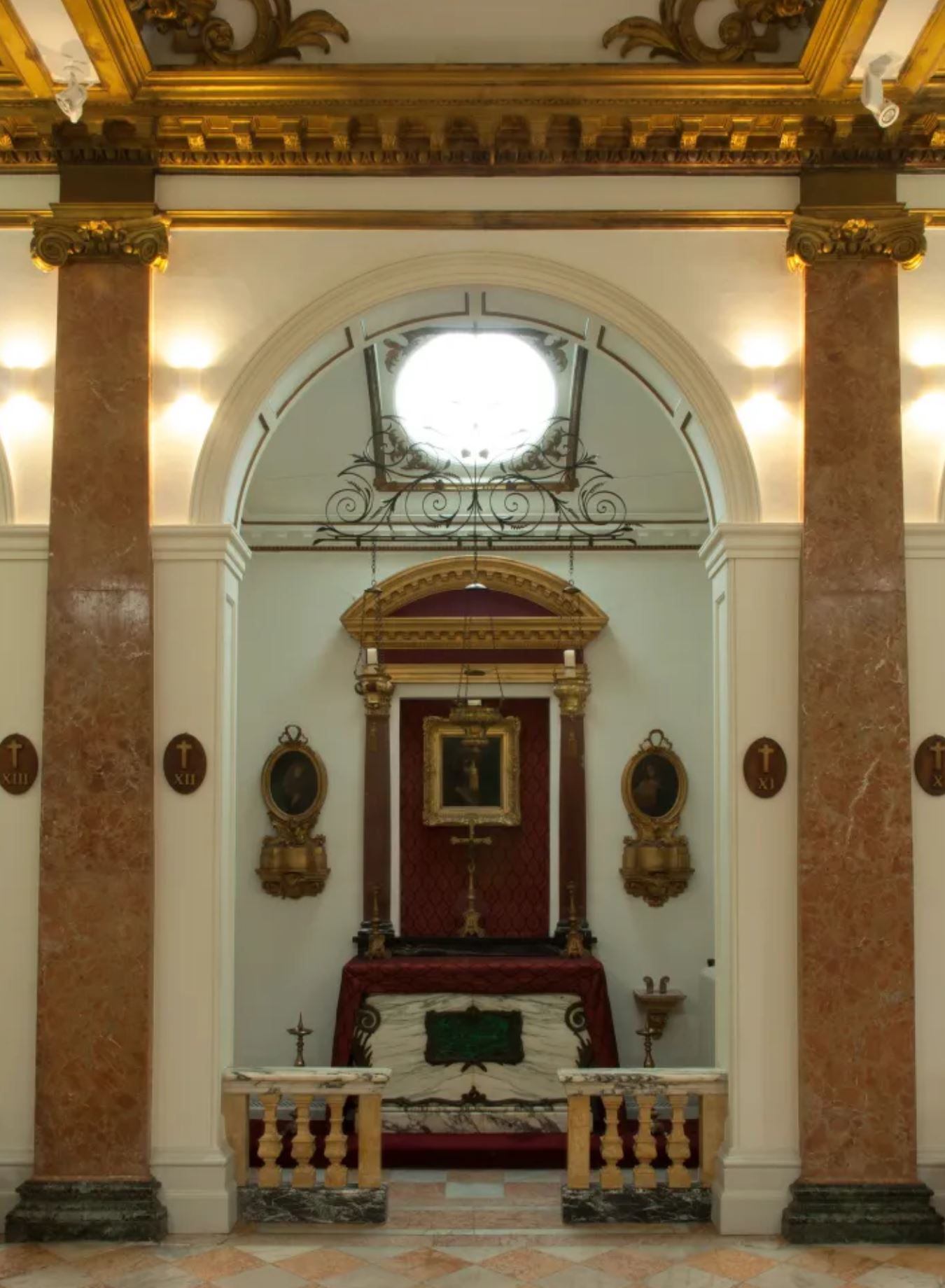
At Stanford Hall, Braye designed and built a Catholic chapel between the house and the stables. The building had a short life because the absence of a damp course made it unsafe. Before demolition, he salvaged marble balustrades, paintings and decorative features. Many were reused in his second chapel project at Eton.
Among the notable works associated with the chapel are a painting of The Lamentation attributed in the parish history to the Baroque painter Guido Reni, an Italian processional cross dating from the late fifteenth or early sixteenth century, and a high-relief terracotta panel by George Tinworth depicting the Release of Peter.
Opposition and design
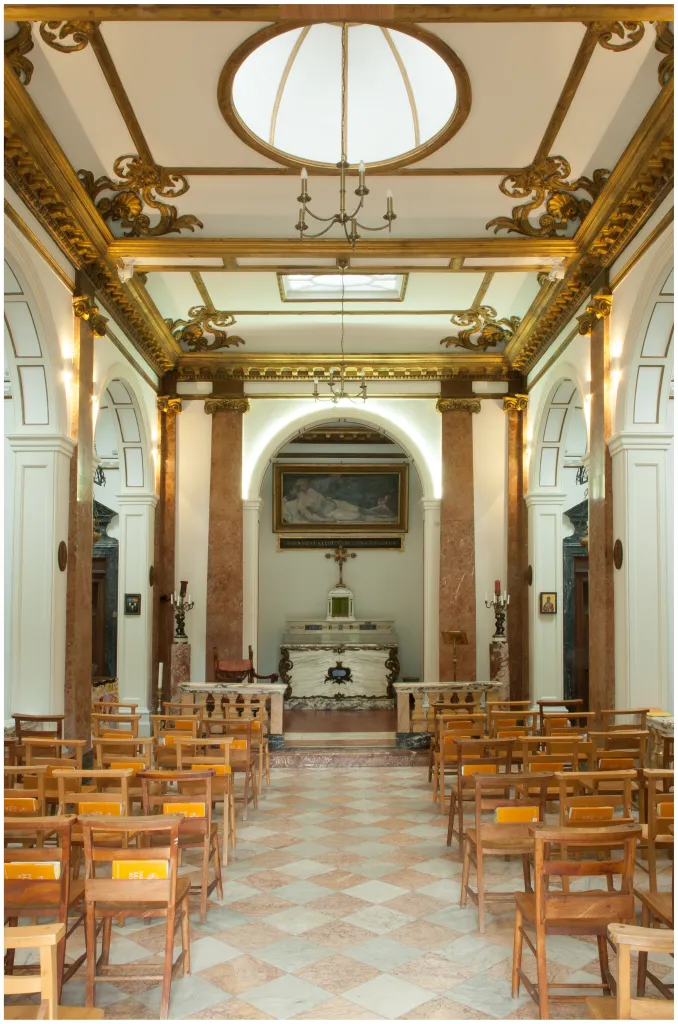
The chapel was not warmly received by the then Head Master, Edward Lyttelton. An old by-law restricting structures overlooking college land was invoked. Braye responded by creating a modestly proportioned and discreet Baroque-style chapel, while giving the interior rich marble and gilt decoration, paintings and decorative art.
Despite the opposition he encountered, Braye’s intention was to provide a Catholic place of worship close to the college and community.